BantoFeatures機能

Consumables消耗品

Requests that close the loop最後まで閉じる補充フロー

The hard part of restocking is not buying. It is that the request, the order and the delivery are three separate conversations that never meet.補充の難しさは買うことではありません。依頼・発注・納品が、交わらない三つの会話に分かれていることです。

What actually goes wrong現場で実際に起きていること

A cleaner notices the toilet paper is nearly out. They are holding a mop. The request becomes a message, if it becomes anything, and the message arrives while the manager is driving.清掃スタッフがトイレットペーパーの残りわずかに気づきます。手にはモップ。依頼はメッセージになるか、何にもなりません。そのメッセージは、マネージャーが運転中に届きます。

It gets bought. Nobody says where it was put. The next person cannot find it, assumes it was not bought, and asks again.買われます。どこに置いたかは誰も言いません。次の人は見つけられず、買われていないと判断してもう一度依頼します。

The failure is visible only to the guest, on the one morning the roll runs out.この失敗が見えるのはゲストだけです。ロールが切れた、その一度の朝に。

How Banto handles itBantoでの扱い方

1

Requested from where the gap is足りない場所から依頼する

Staff raise a request against the property they are in, with quantity and unit, from the phone in their hand. One item can cover several properties at once.スタッフは、いま自分がいる物件に対して、数量と単位を指定して手元のスマホから依頼します。1件で複数物件をまとめることもできます。

2

A queue, not an inbox受信箱ではなくキュー

Requests collect into one list a manager works through, instead of scattering across message threads that get read at different times.依頼はマネージャーが順に処理する1つのリストに集まります。別々の時間に読まれるスレッドに散りません。

3

Delivery says where it went納品は「どこに置いたか」まで

Marking something delivered carries a note about where it was actually left — the shoe box by the entrance, the store room. That note is the part that stops the second request.納品済みにするとき、実際にどこへ置いたかのメモを添えます。玄関のシューボックス、物置。そのメモが、二度目の依頼を止めます。

4

Closed by the person who needed it必要だった人が閉じる

The requester marks it claimed once they have it in hand, which is the only signal that actually means the loop is finished.依頼者が受け取って初めて「受取済」にします。ループが本当に閉じたと言えるのはこの合図だけです。
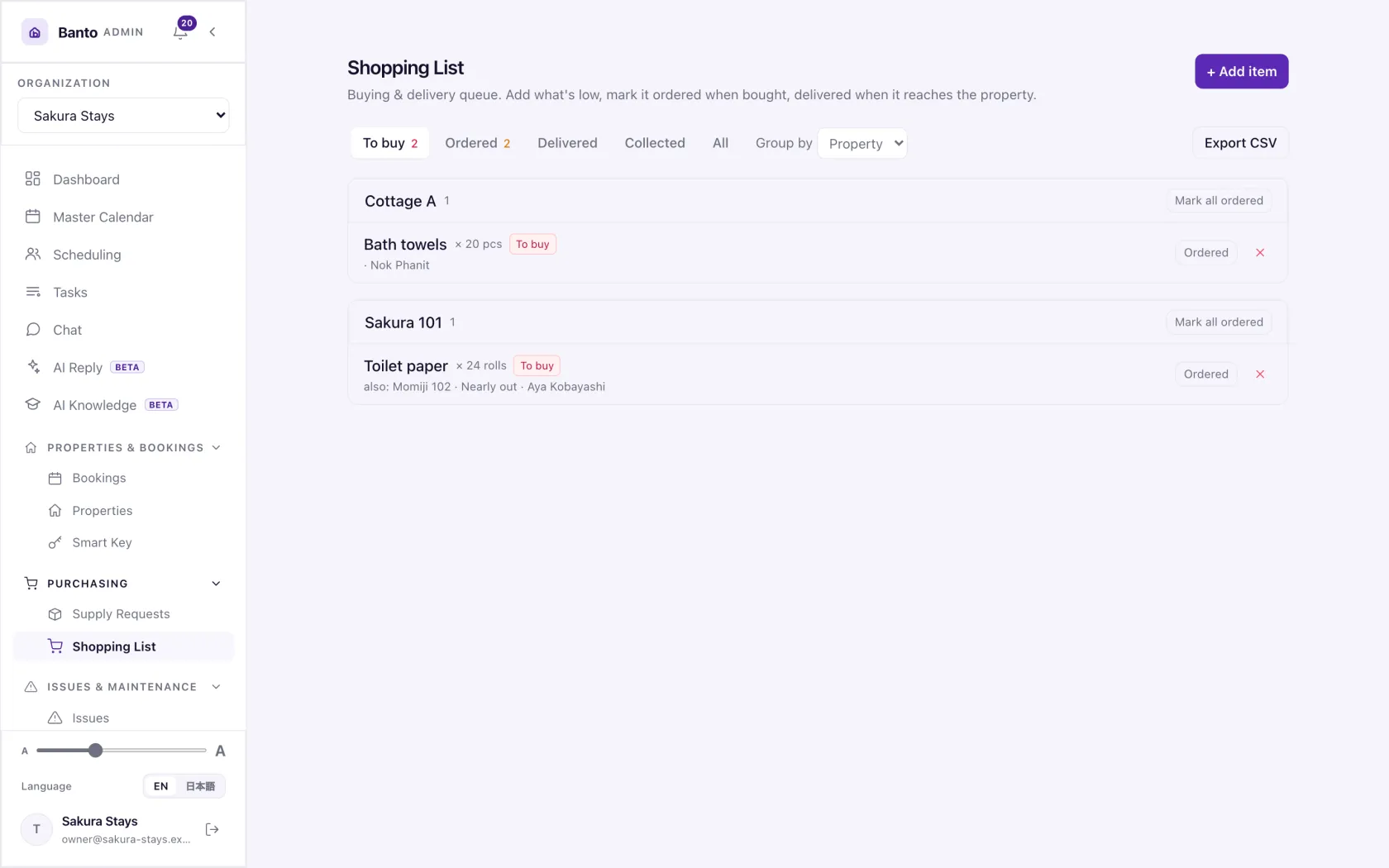
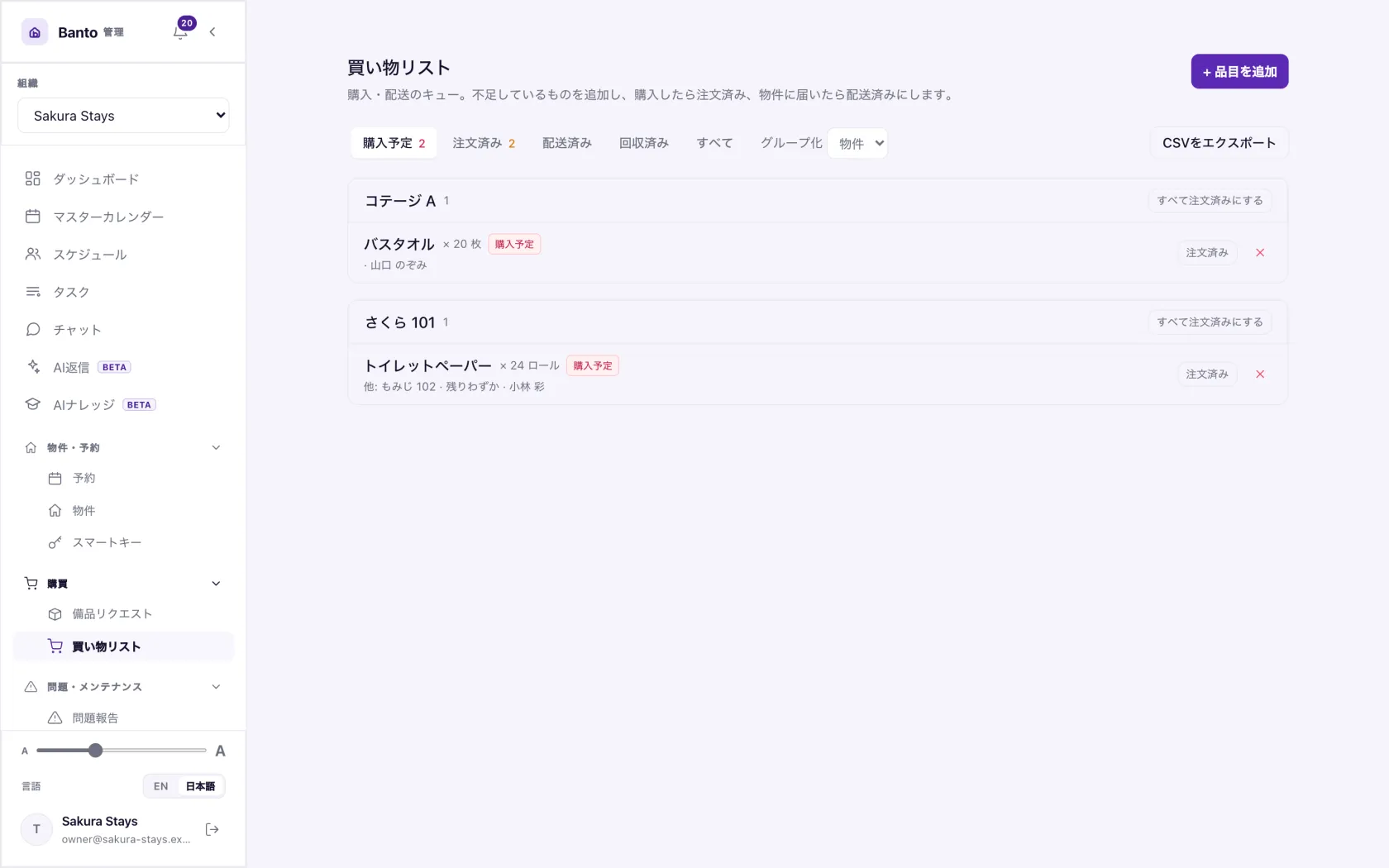
Supply requests moving through requested, ordered, delivered and claimed. 依頼・発注済・納品済・受取済と進む補充リクエスト。
Supply requests moving through requested, ordered, delivered and claimed.依頼・発注済・納品済・受取済と進む補充リクエスト。

The details that matter効いてくる細部

The parts that only show up once you run this every single day.毎日回して初めて効いてくる部分です。

One item, several properties1件で複数物件

Bulk consumables are rarely for one room. A request can name every property it covers so the order is placed once.消耗品はまとめ買いが普通です。1件の依頼に対象物件を複数指定でき、発注は一度で済みます。

A photo instead of a description説明より写真

For the specific bulb or the specific cleaning product, a photo of the packet removes an entire round trip of clarifying questions.特定の電球や洗剤は、パッケージの写真1枚で、確認のやり取りが丸ごと消えます。

Nothing silently disappears静かに消えない

A request stays in a state you can see until someone actually has the item. There is no status that means “probably handled”.依頼は、誰かが実際に受け取るまで見える状態で残ります。「たぶん対応済み」という状態は存在しません。

The history is the reorder point履歴が発注点になる

Once a season of requests has accumulated, the pattern of what runs out and how often is data rather than a feeling.1シーズン分の依頼が溜まれば、何がどのくらいの頻度で切れるかは、感覚ではなくデータになります。

What it replaces何が要らなくなるか

  • “We’re nearly out of…” typed into a group chatグループチャットに書かれる「〜がもうすぐ切れます」
  • Buying the same thing twice because nobody said where it went置き場所を言わなかったせいで二度買うこと
  • A shared note that only one person maintains一人しか更新しない共有メモ

Other featuresほかの機能

Give your properties a bantō.あなたの宿にも、番頭を。

Built and run every day across ten properties in Nagano’s snow country.長野・雪国の10物件で、毎日実際に動かしながら作っています。